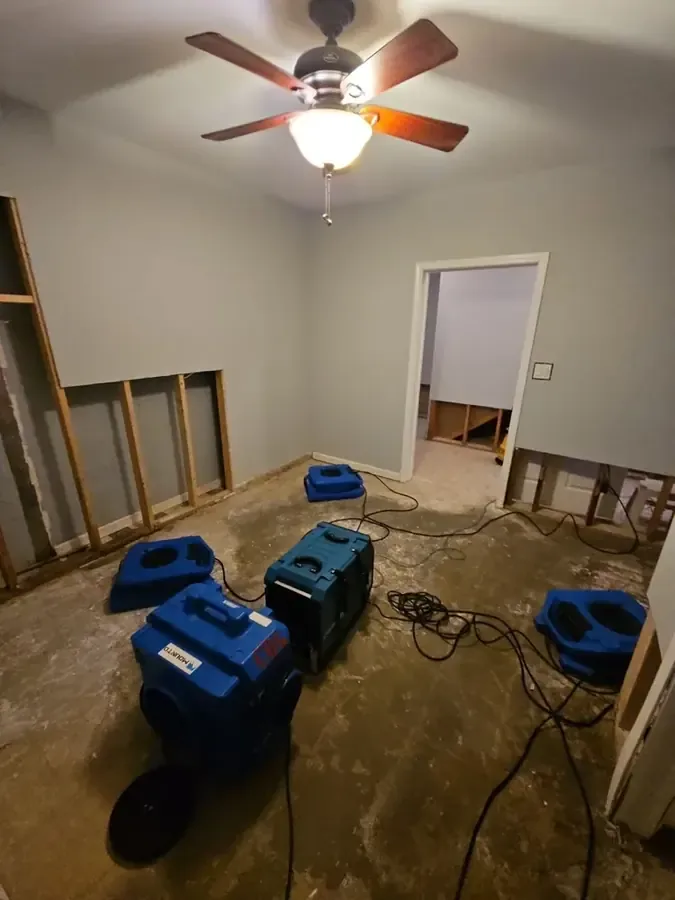
February 2021: Waco Regional Airport recorded 205 consecutive hours at or below freezing. After a pipe releases water during cold weather, stopping the leak is only part of restoring the affected rooms. The drying assessment must find where that water traveled, including material behind an apparently dry finish and spaces outside the plumber's repair opening.
Key takeaways
- Keep the source repair record and the material drying record as separate parts of the job.
- Follow the water into adjoining assemblies rather than checking only beside the repaired fitting.
- Use labeled measurement points that can be revisited throughout drying.
- Treat a stalled reading as a reason to review access and equipment placement.
- Delay finish closure until the affected assembly has a documented moisture handoff.
Start the drying file with the water route
The airport's prolonged freeze record provides a local reason to take cold weather water releases seriously. Inside an affected home, the useful starting record is specific: where the pipe released water, when the leak was noticed and which surfaces were visibly wet on arrival.
Austin Avenue, Brook Oaks and Dean Highland are local neighborhood names. At any affected property, the inspector still needs to identify the actual wall, floor and ceiling assembly before deciding where to take readings or create access for drying.
A room sketch can connect the source to the lowest visible wet areas. It should include changes in floor material, walls crossed by the water and any lower space receiving drips so later readings can be related to the original path through the building.
- Mark the repaired source on the room sketch.
- Record water appearing outside the source room.
- Identify each affected material rather than listing only room names.
- Preserve photographs taken before access openings changed the view.
Separate liquid removal from moisture in materials
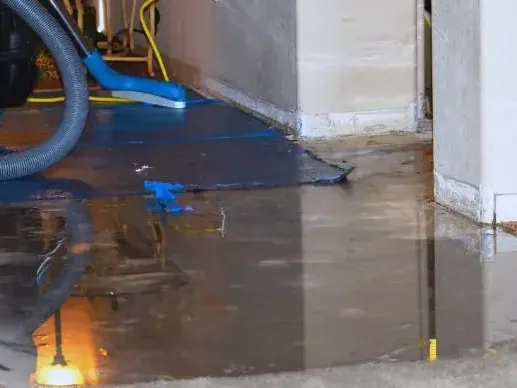
Standing liquid and absorbed moisture require different observations. Extraction records describe the water removed from accessible surfaces, while material readings describe what remains in the building after that work, including moisture within layers that cannot be judged by looking across the room.
The water extraction scope should identify the areas treated and any surfaces that could not yet be reached. That gives the drying technician a useful handoff when a cabinet, floor covering or enclosed space needs further assessment.
A homeowner should receive an explanation when the work changes from removing liquid to drying a retained assembly. The explanation can identify which surfaces remain wet and why equipment is positioned there, making the setup understandable without relying on a generic equipment count.
Give concealed spaces their own assessment
A small plumbing opening exposes only the area needed for the repair. Water may also have reached the wall base, neighboring cavity or ceiling below, so the inspection should compare that opening with observations elsewhere before treating it as the full affected boundary.
The inspector can record where an enclosed assembly was tested and where direct access remains necessary. Keeping those locations distinct prevents an accessible section from standing in for another part of the room whose material condition has not yet been examined.
Access should serve a defined purpose, such as reaching trapped liquid or evaluating a wet layer. Photographs before and after the opening help the owner understand what was exposed and give the reconstruction contractor an accurate description of the surfaces requiring repair.
- Examine floor edges below a wet wall.
- Check ceilings beneath the known water release.
- Label cavities that still need further access.
- Explain the purpose of each opening before finishes are removed.
Create repeatable points for comparison
A reading becomes more useful when its location and material are recorded. A note saying that a room was damp is difficult to compare with a later visit; a labeled point at a particular wall base provides a repeatable place for checking change.
The structural drying assessment should include suitable comparison material as well as affected locations. The technician can explain the measurement method and the comparison used, so a collection of figures becomes a record of the assembly's condition.
The same approach applies when readings differ across a floor. Each material and location should remain identifiable rather than being averaged into a single room description that hides a wet edge or suggests uniform progress where the inspection shows otherwise.
Change the setup when a wet area stalls
Some parts of a room may respond while an enclosed corner stays wet. That pattern gives the technician a reason to review access, retained layers and airflow at the location, along with checking whether the original source correction remains effective.
A revised setup should be documented with the reason for the change. Moving equipment closer to an exposed surface, adjusting the controlled space or creating necessary access are easier to evaluate later when the record connects the action to the observed moisture pattern.
The pipe release cleanup page describes the source and escaped water response. If new liquid appears during drying, the event should receive attention as an active source question rather than being recorded only as slow drying progress.
- Compare the same points before changing the equipment arrangement.
- Check for newly wet surfaces beyond the previous boundary.
- Record access restrictions that interfere with the setup.
- Explain any revised material decision in the room notes.
Plan occupied rooms around the work area
Residents need to know which pathways are available while equipment and opened finishes remain in place. A practical room plan separates necessary household movement from hoses, cords and exposed surfaces so the drying arrangement can stay accessible for monitoring.
Furniture and stored belongings should have identified locations throughout the work. Moving a cabinet back against a wall between visits can cover a measurement point, while placing boxes in front of an opening can obstruct the technician's next inspection.
The contact responsible for the property should receive updates when room access changes. Those updates can describe what has been cleared, what remains restricted and which work must occur before ordinary use resumes, avoiding a vague declaration that the whole building is ready.
Hand the assembly back before the finish is replaced
The final drying record should name the retained materials checked and preserve the last observations at the affected points. It should also identify removed materials and unfinished surfaces so the next contractor can distinguish the drying result from the reconstruction scope.
February 16, 2021: the airport reached minus 1 degree Fahrenheit. That dated weather observation belongs in local cold weather context, while the homeowner's project file should retain the actual discovery date, source repair and material findings for the particular property.
Before a wall or floor is covered again, the repair team should receive photographs of the open assembly and a list of remaining work. Keeping the source correction, moisture handoff and finish replacement connected makes the completed job easier to understand later.
Questions
Does repairing a frozen pipe complete the drying work?
The repaired pipe addresses the release point. The affected building materials still need inspection so moisture behind finishes or outside the repair opening receives attention. The owner should retain the plumbing findings alongside the separate record of those material checks.
Why can a wall look dry while equipment remains?
The exposed finish is only the visible part of the assembly. A technician may still be tracking moisture at a base, cavity or adjoining layer, with equipment supporting the retained material until the relevant comparison points show that the drying objective has been met.
What makes a drying update useful?
A clear update names the area checked, describes its progress and explains the next action. If equipment or access changes, the reason should be tied to a particular observation so the household understands how the plan relates to the wet material.
What should a reconstruction contractor receive?
The handoff should include the affected material record, photographs of opened areas and a list of surfaces awaiting replacement. Any unresolved source issue or inaccessible location should be identified before the contractor schedules closure of the assembly.