The endpoint comes from the materials

Structural Drying in Woodway, TX

A room can feel comfortable while framing or flooring remains wet. The drying team measures the assembly, controls evaporation and humidity, and adjusts equipment until the affected materials reach the documented drying goal.

(888) 527-9134Materials still holding moisture?
IICRC S500 framework Daily material readings 24/7 water-loss dispatch
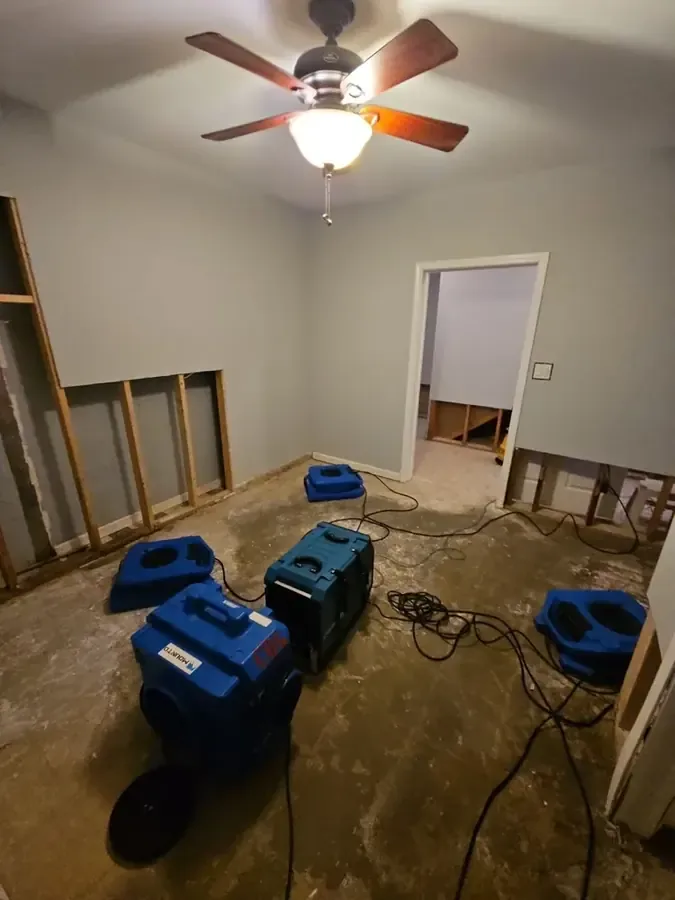
Blue drying equipment across a room with exposed lower wall framing
Right now

First steps for structural drying in Woodway

  1. 1

    Confirm the source is controlled

    Drying cannot make steady progress while fresh water continues entering. Keep the source repair information available and report any renewed seepage or dripping immediately.

  2. 2

    Leave contaminated work undisturbed

    Sewage and outside water need appropriate removal and cleaning before airflow is applied. Do not place household fans over dirty materials in an occupied room.

  3. 3

    Protect the planned equipment area

    Keep people and pets away from cords, hoses and unstable finishes. Clear safe access for monitoring without moving machines or blocking the intended airflow path.

  4. 4

    Describe what remains damp

    Mention the material, recent extraction and any equipment already operating. Dispatch is available 24/7 for assessment of wet assemblies and the drying setup they need.

Structural drying in Woodway addresses water held inside materials after the floor puddle is gone. Framing, underlayment, wall plates and dense assemblies do not all release moisture at the same rate. The technician establishes the material baseline and a suitable dry comparison, then builds an equipment plan around the wet area, available access and evaporation load.

Measuring the assembly before choosing equipment

Properties on Estates Drive can include connected rooms with several finishes. The drying assessment identifies those layers individually. A room humidity reading describes the air, while a material reading describes a particular surface or depth. Both are useful, but they answer different questions. The moisture map preserves the locations so later readings can be compared consistently.

  • Identify the wet materials and the limits of accessible testing.
  • Select unaffected comparison material where appropriate.
  • Record temperature and humidity alongside material measurements.
  • Check hidden cavities when visible surfaces improve but moisture remains.
Typical cost ranges

What does structural drying cost in Woodway, TX?

Structural drying commonly ranges from $1,000 to $3,000 for one accessible room after extraction. Several material assemblies can require $3,000 to $6,500. Dense layers, restricted cavities or broad losses may reach $6,500 to $12,000, depending on access and monitoring needs.

Accessible room assembly

$1,000 to $3,000
  • Baseline and reference readings
  • Air movers with dehumidification
  • Daily progress checks

Several wet assemblies

$3,000 to $6,500
  • Multiple equipment zones
  • Cavity and flooring monitoring
  • Adjustments as readings change

Complex retained moisture

$6,500 to $12,000
  • Dense or restricted materials
  • Specialized access and drying methods
  • Detailed completion records

These planning ranges vary with water category, affected floor area, material class and the delay before drying. Access and disposal also affect the scope. The Woodway water damage cost calculator allows those conditions to be compared.

Step by step

How structural drying is handled in Woodway

The restoration technician records the wet materials and dry comparison readings. That inspection sets the removal boundary, equipment arrangement and measurements needed before repairs begin.

  1. 1

    Establish the material baseline

    The technician maps the wet assembly and records appropriate dry comparisons. Air conditions and accessible material readings establish a measurable starting point for the equipment plan.

  2. 2

    Set the drying chamber

    Air movers and dehumidifiers are arranged around material exposure, safe circuits and occupancy. The team explains the room conditions needed for the equipment to work effectively.

  3. 3

    Adjust from daily evidence

    Repeat measurements show which areas improve and which stall. Equipment, access or airflow changes are recorded so the next check can evaluate their effect.

  4. 4

    Verify and release the area

    Final readings and material condition establish the drying endpoint. The handoff identifies remaining reconstruction and any separate substrate testing required for new finishes.

Balancing air movement and dehumidification

Air movers encourage evaporation from accessible wet surfaces. Dehumidifiers remove that moisture from the room air so evaporation can continue effectively. Adding fans without controlling humidity can leave the building damp, while a dehumidifier without access to trapped layers may dry the air faster than the assembly. The equipment arrangement needs both parts to work together.

At buildings near Carleen Bright Arboretum, safe circuits, occupied spaces and door positions shape the drying chamber. The technician explains which openings should remain closed and which areas need access for monitoring. Some dense or deeply saturated materials require specialized drying methods or additional exposure. Equipment changes should be tied to the readings and recorded in the daily log.

  • Keep assigned airflow routes clear of furniture and stored items.
  • Report a breaker trip or equipment stoppage promptly.
  • Do not change windows, doors or machine settings without coordination.
  • Reassess a stalled material instead of assuming more time alone will solve it.
Knowing when the drying equipment can leave

Woodway Park helps identify the service area, while the property measurements determine the endpoint. A common goal for suitable wood materials is comparison within 2 to 4 points of a dry reference, interpreted for the material and meter. Other assemblies need their own criteria. A fixed day count cannot replace those comparisons or the condition of the retained material.

The EPA indoor air quality information addresses moisture and indoor conditions. The Ready.gov flood precautions explain safe access around water-damaged areas. Contaminated materials require appropriate cleaning or removal before ordinary drying airflow begins.

The completion file should show the initial map, equipment arrangement, daily changes and final readings. Reconstruction can then focus on removed or physically damaged finishes. Some flooring systems require separate substrate tests before installation. The drying record supports that handoff without substituting for the manufacturer's installation requirements or a structural assessment where one is needed.

Woodway, TX service area
Service area

Structural drying in Woodway, TX

Restoration service covers Woodway, ZIP 76712, including Estates Drive and properties around Carleen Bright Arboretum. The assessment follows moisture through the affected building.

Nearby coverage reaches Waco, Hewitt, Robinson, Bellmead and Lacy-Lakeview.

See every Woodway neighborhood and nearby town covered

Answers

Structural Drying questions in Woodway, TX

Why does the room air feel dry before the wall is dry?

The air and the material hold moisture differently. Dehumidification may lower room humidity while a closed cavity or dense layer releases water slowly. Material readings are needed to assess the assembly itself.

Are more fans always better?

No. Airflow needs to suit the exposed surface and work with moisture removal from the air. Poor placement can miss the wet material or spread contamination. The technician adjusts equipment from the drying conditions and readings.

Can equipment be turned off overnight?

Unplanned interruptions can slow progress and change the drying chamber. The technician should be contacted about noise, power or occupancy concerns so the setup can be adjusted safely rather than stopped without coordination.

Does a fixed number of days prove completion?

No. Material type, saturation, access and indoor conditions affect progress. The drying goal is verified by measurements and material condition. Material comparisons establish the endpoint, while a calendar estimate supports planning.

What does a dry reference provide?

A suitable unaffected material gives a comparison for the wet area. The technician interprets readings for the material and instrument. That comparison helps distinguish normal conditions from retained moisture requiring further attention.

When should stalled drying be reported?

Report new water, equipment faults, breaker trips or a material that appears wetter. Dispatch operates 24/7 for water-loss concerns. The drying team can assess the cause and revise access or equipment rather than leaving an ineffective setup unchanged.

Still dealing with it?

A comfortable room can still contain wet building layers. Material checks establish what remains to be dried.

(888) 527-9134Review the retained moisture
24/7 emergency dispatch

Finish drying with measurements that support repair

The team controls airflow and humidity, tracks material progress and documents the endpoint before equipment leaves.

(888) 527-9134Arrange measured drying
(888) 527-913424/7 water damage help