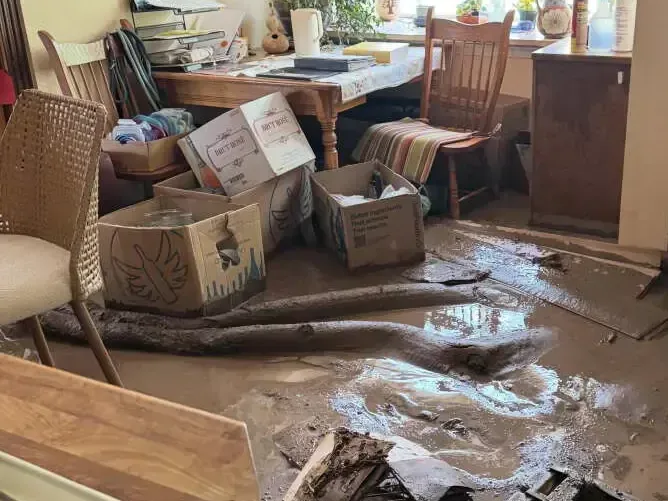
Hewitt's stormwater program describes street flooding during heavy rainfall and notes that drainage blockages can make it more serious. When runoff reaches a doorway, the homeowner needs a record of the outdoor approach and the indoor spread. A drainage report and a room cleanup assessment can proceed together, with each focused on the conditions it needs to address.
Key takeaways
- Observe approaching water from a safe location rather than entering a flooded street.
- Photograph the doorway and the first affected indoor surface before water recedes when safe.
- Use the city's drainage concern reporting system for a public drainage observation.
- Keep belongings touched by outside water separate from dry household storage.
- Track the affected floor layers before replacement trim or flooring conceals them.
Capture the approach while remaining out of the flow
A useful exterior observation describes water gathering near the entrance, the direction it was moving and the visible point where it reached the building. Photographs from a protected position can show those details without requiring anyone to walk into a flooded street or ditch.
The city's drainage system includes ditches and retention ponds serving streets and neighborhoods. A resident reporting a concern should identify the observed location and condition, such as standing water or an apparent obstruction, so the report has a clear subject for municipal attention.
The indoor response should begin with the route occupants can use safely. A wet doorway may affect the usual exit, so the household needs to recognize slippery surfaces, contacted electrical items and any route that would require crossing the incoming water.
- Record the direction of visible water movement from a safe position.
- Identify the entrance where water first appeared inside.
- Keep exterior observations and indoor photographs in the same event folder.
- Avoid entering drainage structures or moving obstructions during flooding.
Build a drainage report around an observable condition
The City of Hewitt offers an online drainage concern reporting system. A useful submission states where the concern was observed, when it occurred and what the observer saw, with photographs that show the surrounding context as well as the specific location.
The Storm Drainage Division monitors flood control and mitigation, and drainage crews check ditches for erosion and blockages. Those municipal functions give the report a practical purpose while the household arranges assessment of materials already wet inside the property.
The submitted description and any response should stay with the event records. If the outdoor condition changes during later rainfall, a new dated observation can show the difference without replacing the original photographs or presenting an old condition as a current report.
Treat the doorway as the beginning of the room inspection
The first wet threshold may be easy to identify, but water can continue beneath a mat, along a wall base or across a floor transition. The inspection should follow that route into the room and record where the visible water and wet materials end.
The storm water cleanup assessment should include the entry opening and affected interior layers. This allows the homeowner to understand why a narrow entrance problem may require access farther into the room or behind trim along an adjoining wall.
Rain runoff flows over paved streets, parking lots and building rooftops before entering drainage systems. When outside water enters a building, the contacted materials need a contamination assessment as well as moisture readings, with cleanup decisions tied to the actual surfaces and water path.
- Inspect beneath removable mats and at floor transitions.
- Record wet trim and wall bases along the entry route.
- Keep contacted contents apart from unaffected belongings.
- Identify surfaces hidden by furniture or fixed storage.
Document removal before the room looks different
The room can change quickly once water and debris are removed. Initial photographs should show the contact boundary, items on the floor and the relation of the entrance to nearby furniture so later material decisions can be traced to the observed conditions.
A water extraction record should describe the areas treated, the accessible surfaces and any remaining liquid trapped by coverings or obstructions. If a material is removed, its room location and condition should be recorded before disposal.
This record helps the owner understand the difference between a cleaned exposed floor and the assembly beneath it. It also gives the drying technician a starting point for checking edges and layers that were inaccessible while furniture or coverings remained in place.
Give the entry repair its own scope
A contractor examining the doorway needs the account of how water reached it and photographs of the opening. The contractor can then assess the entry assembly and surrounding conditions, while the restoration team records the water damage within the rooms.
Temporary protection, source correction and finish replacement should each be described clearly. An owner needs to know which work addresses future entry, which work removes the existing damage and which surfaces will still require repair after the room has been dried.
The city's drainage report can be retained alongside the building assessment without substituting for it. A report about a public ditch and an inspection of a threshold concern different parts of the observed route and should remain identifiable in the property file.
- Photograph the entrance before temporary protection changes its appearance.
- Ask the repair contractor to describe the entry point examined.
- Record any temporary measure and its remaining followup work.
- Keep exterior correction separate from replacement of indoor finishes.
Check the lower wall and floor after liquid removal
Once accessible liquid is gone, retained surfaces need testing at the locations reached by the water. The base of a wall, a floor edge beneath trim and an adjoining room transition can retain moisture even when the center of the room appears ready for use.
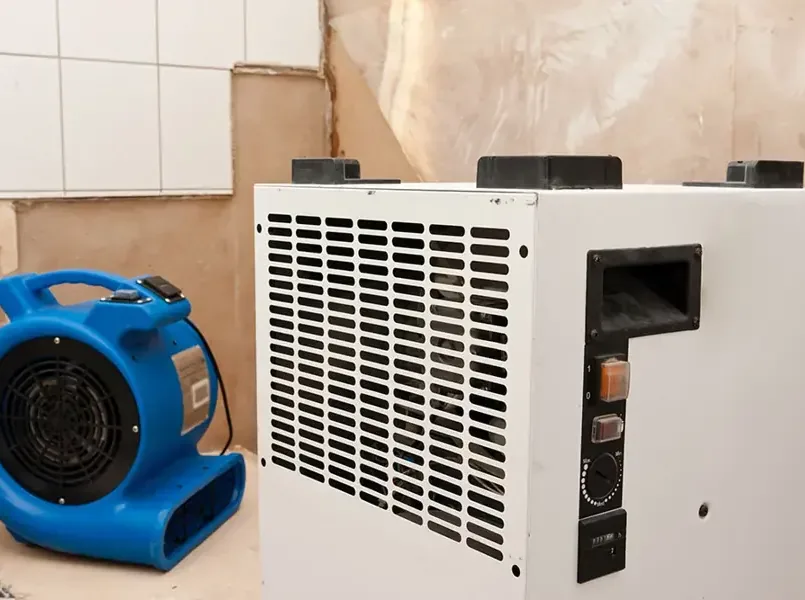
A drying plan for the retained structure should name those locations and explain the access required. Repeated observations show whether the setup is reaching the affected material and whether a concealed edge needs another inspection before it can be closed.
The household should keep the work area available for checks rather than replacing stored belongings as soon as the open floor looks dry. Clear access helps the technician compare the same points and avoids covering a location still awaiting a material decision.
Make the next rain easier to document
At closeout, the owner can keep a simple reference set showing the original doorway, the affected rooms and any completed entry repair. The file should also retain the drainage submission so a later observation can be compared with what was previously reported.
Hewitt Park and Warren Park host community activities and events. For a household returning to ordinary routines, the practical priority remains a clear account of which rooms can be used and which openings, floor repairs or access restrictions remain at home.
A later rain observation should be recorded with its own date and photographs from a safe location. Keeping the new event separate preserves the cleanup history while showing whether water approached the same entrance, followed another route or remained outside the building.
Questions
Where can a resident report a drainage concern?
The city provides an online drainage concern reporting system. The strongest report identifies the location, the observed condition and the date, with photographs when they can be obtained safely. Saving the submission creates a useful reference for any later followup.
Should someone clear a ditch while water is rising?
Residents should remain away from flowing or standing floodwater and drainage structures. Observations can be made from a protected location and submitted to the city, allowing the household to concentrate on safe movement and the rooms affected by incoming water.
Why check flooring beyond the entrance mat?
The mat shows only one contacted surface. Water may have traveled under its edge, beneath adjacent flooring or toward a wall base. Inspection of those connected areas helps determine the actual removal and drying work rather than limiting the scope to the visible puddle.
What should remain in the property file after cleanup?
Keep the initial entry photographs, drainage correspondence, material removal notes, drying results and any doorway repair record. A list of remaining finish work gives the next contractor a clear handoff and helps the owner distinguish completed tasks from those still scheduled.