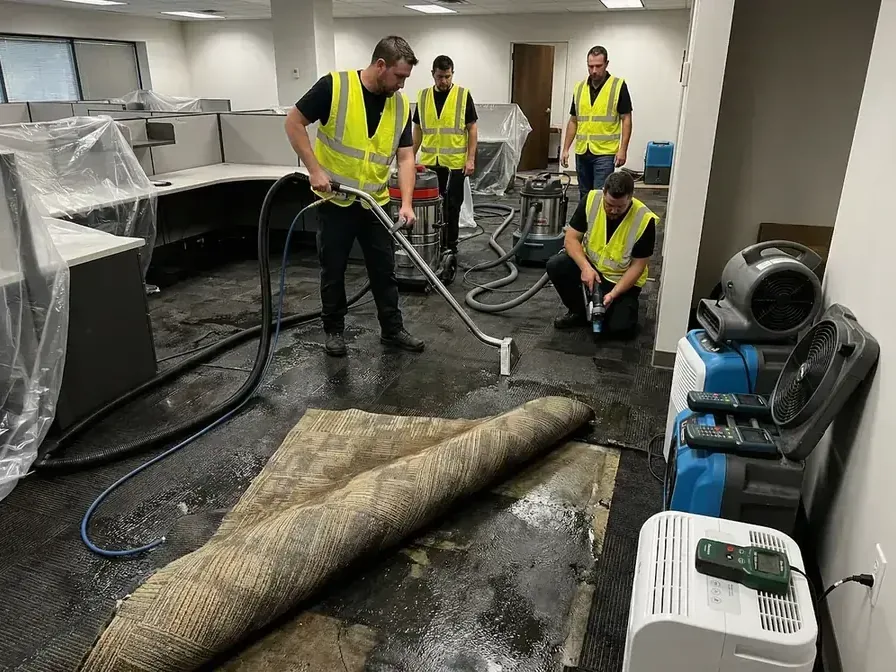
May 2024: heavy rainfall brought water backups and flooding to many areas of Bellmead. The city has homegrown businesses, retail chains and an active hotel and motel sector, so an indoor water loss can affect stock, guest rooms or employee work areas. The immediate operating question is which spaces can be approached safely and how the wet area will be kept separate during assessment and cleanup.
Key takeaways
- Assign a property contact who can coordinate room access and contractor updates.
- Mark affected work areas and preserve safe routes around the cleanup operation.
- Inventory wet stock where it was found before items are moved or discarded.
- Report public utility symptoms separately from the interior material damage.
- Reopen spaces according to their documented condition and remaining repairs, rather than a single building wide label.
Define the affected part of the business
The intersection of Interstate 35 and Loop 340 is part of the city's commercial setting. Inside a particular business, however, the useful map begins with the rooms actually touched by water: an entrance, stock area, office, service space or guest accommodation.
The manager should identify the usual movement through those rooms and where the loss interrupts it. Employee access, deliveries and visitor circulation may use different routes, so a single barrier at the first visible puddle may leave another approach to the wet area open.
A property contact can gather those access needs before the mitigation setup is installed. The contact should know who can authorize room entry, who has keys and how staff will receive updates when the working boundary changes during removal or drying.
- Name the affected rooms using the business's own room labels.
- Identify entrances and work routes that cross the wet area.
- Assign a contact for keys, permissions and contractor access.
- Communicate changed room restrictions to staff before their next shift.
Identify the water condition before moving stock
A business may discover water without immediately seeing its source. The initial description should record visible entry, affected drains or leaking equipment and identify whether water is still arriving, while keeping staff away from unsafe electrical equipment and contaminated surfaces.
The commercial water damage assessment should account for the work activity inside the affected area. Stock, fixed equipment and public use create different access needs, and the cleanup scope should explain how those needs affect the removal and inspection sequence.
Items touched by outside water or wastewater should remain separate from dry stock until their condition is assessed. Moving wet inventory onto unaffected shelves can spread the problem and make it difficult to tell which goods were originally exposed in the damaged room.
Use inventory photographs before the layout changes
A shelf photograph taken before removal can show the relationship between wet packaging, lower storage and the water boundary. Individual item records then add the details needed to identify the goods without losing the context of where the damage occurred.
The business should use consistent room and storage labels for items moved out of the work area. That allows managers to follow what was relocated, what remains under assessment and what has been removed, even when the temporary storage arrangement differs from ordinary operations.
The same method helps with furnishings in guest or employee rooms. Photographs and labels should keep each item tied to its original space so the return plan does not depend on someone remembering where a chair, cabinet or stored carton belonged.
- Photograph shelves and room contents before relocating them.
- Keep contacted goods apart from unaffected inventory.
- Label temporary storage by the original room or stock area.
- Record removal decisions with the item description and condition.
Send utility observations through the public reporting route
Bellmead Utility Operations responds to clogged wastewater mains and emergency overflows. If the business observes a wastewater concern, its report should describe the location and visible symptoms while the interior cleanup team assesses the contacted rooms and materials.
May 2024: municipal crews worked to restore wastewater services during the heavy rain period. That historical response belongs with the dated event, while a current business report should provide the present observations, contact details and any change in the overflow after discovery.
The manager should retain the submitted report and any response beside the building's incident record. Those documents can be consulted alongside the plumbing and mitigation findings, with each record identifying the work or observation it actually describes.
Arrange removal around a usable working boundary
Equipment access and removed materials need a planned route through the premises. The team should explain which doorway will serve the work area and how that route relates to occupied rooms, deliveries and any remaining business activity outside the affected section.
Water extraction should be recorded by room and accessible surface. Where fixed furniture or equipment blocks a wet edge, the inspection notes should identify that limitation and the action needed to reach it, rather than treating the open aisle as the entire loss.
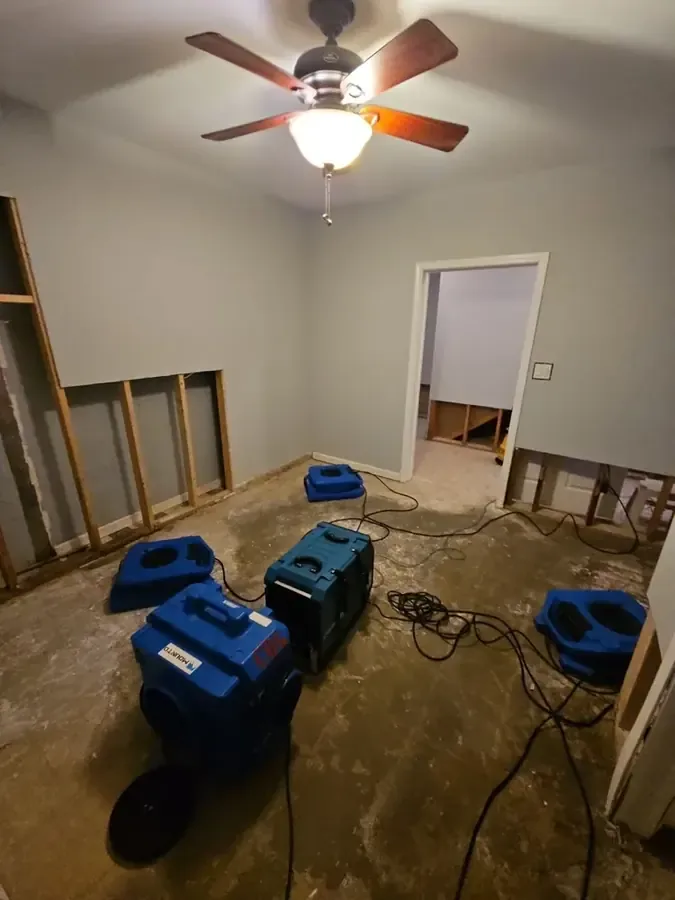
The working boundary should be reviewed whenever access changes. Opening a wall, removing stock or exposing a wet floor layer can alter the area needing restriction, so staff need the updated room plan before they resume movement near the active work.
- Keep the equipment route visible and separated from ordinary foot traffic.
- Identify fixed items that block inspection of wet surfaces.
- Record access changes as rooms are opened or cleared.
- Tell the property contact which restrictions remain after each visit.
Track drying by the material in each room
A store room, office and guest room may contain different finishes and fixed assemblies. Their progress should be tracked at specific affected surfaces so the business receives an explanation of what has improved and what still needs access or continued attention.
The structural drying record should connect equipment placement to those surfaces. A room label, measurement location and observed change make the update useful for scheduling, particularly when a neighboring space reaches its objective before another area does.
Managers should avoid moving stored items back into an area that still needs readings or access. The return plan can identify where equipment remains, which wall or floor edges must stay exposed and who will confirm the next change in room availability.
Reopen from a room condition record
A room's drying handoff should be paired with an assessment of missing flooring, open wall sections, disconnected equipment and other unfinished work. The manager needs that combined picture before assigning the space to staff, customers or guests for its usual purpose.
The business can keep a remaining work list with a responsible contact for each item. That list should distinguish reconstruction and equipment tasks from completed water removal, allowing scheduling discussions to focus on the actual obstacle to using a room.
The final incident folder should preserve the original water observations, inventory movements, contractor findings and room handoffs. If a later problem appears, the manager can record it separately and compare the new location with the work already completed at the premises.
Questions
Who should coordinate a commercial water loss?
A designated property contact should manage access, keys and updates between the business and contractors. That person can collect staff movement needs and relay changes in room restrictions, helping the work proceed with a consistent account of the areas available for use.
Should wet stock be moved to an unaffected shelf?
Contacted inventory should be assessed and kept apart from dry goods. Its original position should be photographed before relocation, and any temporary storage should retain a clear label so the business can follow the item through assessment, removal or return.
What belongs in a wastewater report?
Useful details include the observed location, whether the overflow continues and the time it was discovered. The submitted description and response can remain in the incident folder alongside the separate records of interior cleanup and any plumbing examination.
Can adjoining rooms reopen at different times?
Room decisions should follow the actual material condition, access needs and unfinished work. A space with completed drying may still need a floor repair or equipment check, so the manager should examine its full handoff before returning it to normal business use.