Moisture beneath the finish

Slab Leak Water Damage in Bellmead

Water surfacing at a floor joint can travel farther beneath the finish than the visible patch suggests. Bellmead slab leak cleanup connects plumbing diagnosis with inspection of flooring, wall bases and the rooms sharing that wet assembly.

(888) 527-9134Describe the damp flooring
Supply source tracing Floor layer assessment Targeted drying access
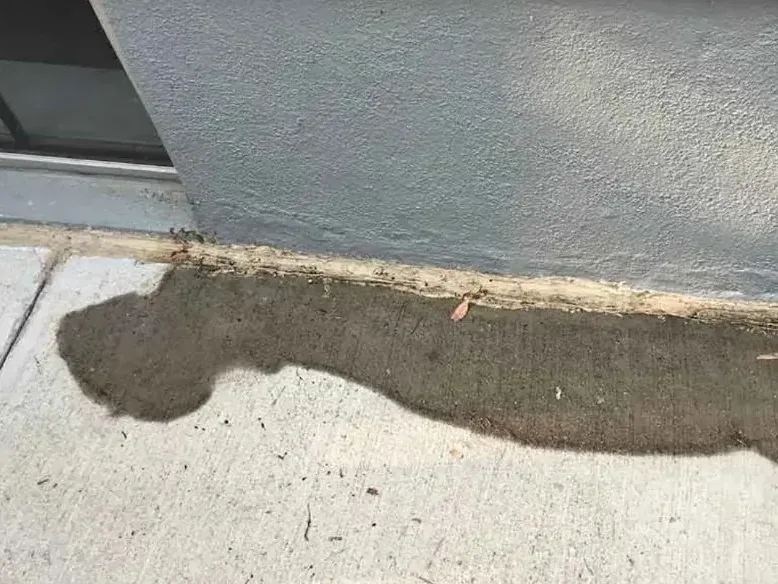
Wet patch spreading across concrete along the base of a wall
Right now

First steps for slab leak water damage in Bellmead

  1. 1

    Keep weight off damaged finishes

    Lifted boards or soft floor sections can create a trip or collapse hazard. Occupants should avoid those sections and describe their location from a dry doorway.

  2. 2

    Arrange safe supply isolation

    A plumber can identify the appropriate shutoff and investigate continuing flow. No person should enter pooled water near electrical equipment merely to reach a valve.

  3. 3

    Preserve the first floor pattern

    Photos of seams, wall edges and damp cabinet bases help record the initial spread before access work changes the room or materials are moved for cleanup.

  4. 4

    List the adjoining wet spaces

    The property contact should note which rooms share the affected floor and where moisture reappears. That information helps focus measurements beyond the most obvious surface stain.

A floor that darkens again after wiping needs more than another towel. Water may be moving beneath the surface, soaking an underlayment or collecting against a partition. In Bellmead, utility guidance recommends checking the meter for continuing flow after household water use stops. That observation can help a plumber investigate an active supply problem while the restoration assessment follows the resulting material damage.

Locate the release before opening the floor

The wettest visible seam and the damaged pipe may occupy different positions. Plumbing diagnosis should establish the source and proposed repair access before a broad floor opening is planned. A restoration inspection then maps damp finishes, nearby trim and adjoining rooms. Keeping those findings together reduces confusion about which opening serves the pipe repair and which exposes materials that need drying.

  • Floor edges can hold moisture beneath otherwise clean looking surfaces.
  • Cabinet bases may conceal a continuation of the wet area.
  • Door thresholds deserve comparison readings on both sides.
  • Loose or swollen finishes should be recorded before removal begins.
Typical cost ranges

What does slab leak water damage cost in Bellmead, TX?

Bellmead slab leak damage planning uses $1,500 to $3,000 for a limited floor section, $3,000 to $6,000 for connected rooms and $6,000 to $12,000 for concealed spread. Pipe repair, finish replacement and access requirements should be identified separately in the proposed scope.

Limited floor section

$1,500 to $3,000
  • Inspection around the wet seam
  • Accessible floor moisture removal
  • Focused drying of retained materials

Connected rooms

$3,000 to $6,000
  • Readings across adjoining room edges
  • Additional access beneath affected finishes
  • Equipment serving several wet surfaces

Concealed spread

$6,000 to $12,000
  • Multiple hidden layers requiring assessment
  • Broader material handling and access
  • Extended monitoring of difficult assemblies

These planning ranges vary with water category, affected floor area, material class and the delay before drying. Access and disposal also affect the scope. The water damage cost calculator allows those conditions to be compared.

Step by step

How slab leak water damage is handled in Bellmead

The restoration technician records the wet materials and dry comparison readings. That inspection sets the removal boundary, equipment arrangement and measurements needed before repairs begin.

  1. 1

    Record the floor assembly

    The assessment identifies the finish, accessible underlying layers and nearby partitions, then records where moisture differs from comparable dry areas within the same building.

  2. 2

    Coordinate openings with repair

    Plumbing access and restoration access are discussed together so the owner understands each opening's purpose and the materials expected to remain after the source repair.

  3. 3

    Remove water from accessible layers

    Extraction addresses collected water, and damaged materials are separated as needed. The retained assembly receives equipment arranged around its exposed surfaces and moisture distribution.

  4. 4

    Compare readings before replacement

    Follow up measurements document the floor's response and any damp edges needing further attention, giving the repair contractor a clearer handoff before new finishes are installed.

Separate the plumbing repair from the material loss

Bellmead performs plumbing and foundation inspections during construction. For a repair involving those assemblies, the property owner and repair contractor should clarify applicable inspection requirements as part of their work planning. Restoration documentation should describe the water damage itself, including floor coverings, affected wall bases and any access needed to reach trapped moisture after the source has been addressed.

A property near Brame Park may have an entirely different floor assembly from a building by Loop 340 or Interstate 35. The inspection should identify the actual materials in the affected rooms. Measurements at seams, perimeter walls and apparently dry comparison areas provide a clearer picture than assumptions about the building's age or construction.
Dry what remains before closing the assembly

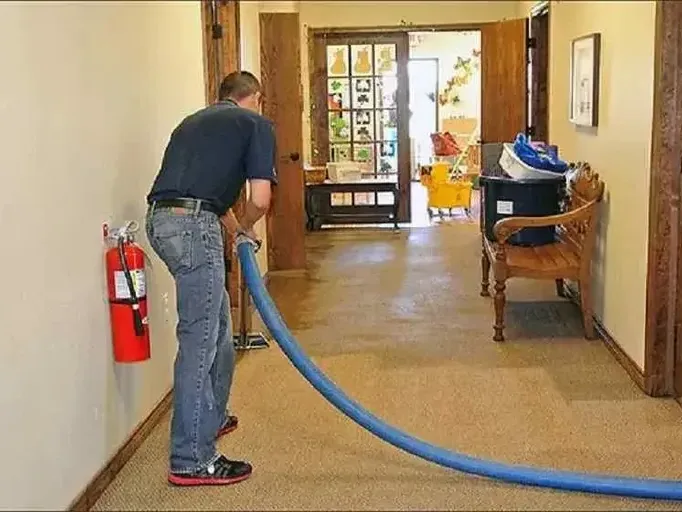
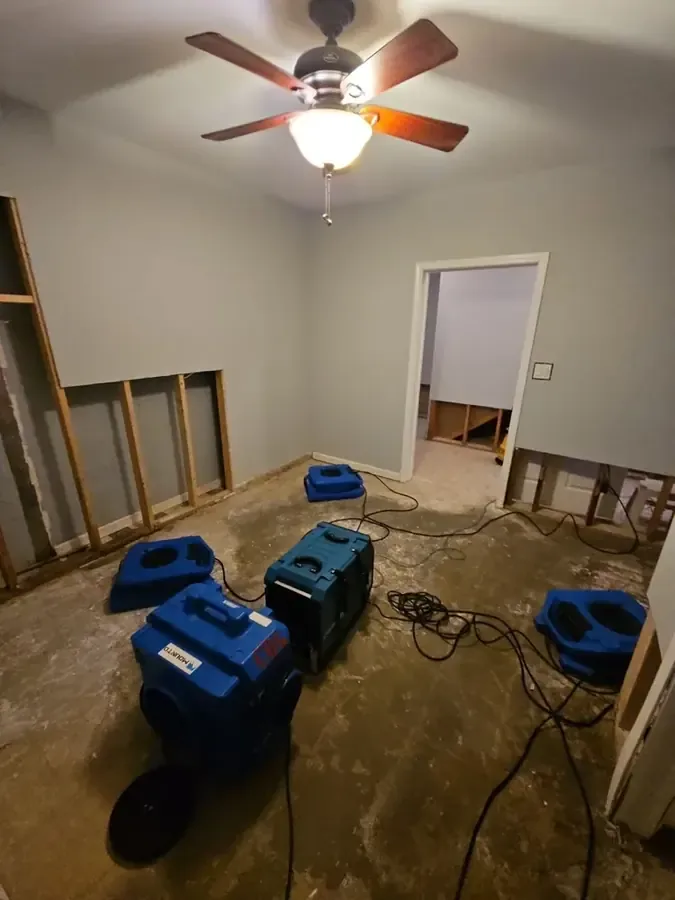
Removing surface water starts the recovery but does not finish it. The extraction assessment identifies liquid water that can be collected, while material drying addresses moisture still held inside retained components. Access openings, equipment placement and monitoring should reflect the layers that actually became wet.

Replacement flooring needs a sound, suitably dry base. A damaged finish may require removal even when the supporting material can remain. Conversely, an intact surface can hide a wet layer that needs more access. The scope should explain those choices room by room and preserve readings before repair work covers the affected assembly.

During the work, usable walking routes and dry storage areas help keep belongings away from the wet floor. Equipment should remain positioned for the intended airflow until the drying assessment supports a change.

Bellmead, TX service area
Service area

Slab leak water damage across Bellmead and nearby towns

Bellmead properties around Brame Park, Interstate 35 and Loop 340 need floor assessments based on the affected assembly and safe interior access.

The same service nearby: slab leak water damage in Woodway, Lacy-Lakeview, Waco.

Water damage restoration in Bellmead · every town covered

Answers

Slab Leak Water Damage questions in Bellmead, TX

Can water at a seam mean a concealed supply leak?

It can, but the source needs plumbing diagnosis. A spill, another fixture or moisture entering elsewhere can also reach that seam. The cleanup inspection should record the affected layers while the origin is investigated.

Does the meter check locate the damaged pipe?

Continuing flow after household use stops is a useful observation from city utility guidance. It helps identify a possible active loss, while locating the precise defect requires a separate plumbing investigation at the property.

Must the entire room floor come out?

The decision depends on the assembly and wet area. Access may be limited where materials remain sound, while swelling, trapped moisture or connected underlayment can require a broader opening to complete drying effectively.

Does fixing the pipe finish the restoration?

A repaired pipe stops the source but leaves previously absorbed moisture behind. Floor layers, wall bases and contents still need assessment, with removal or drying selected according to their condition and accessibility.

What belongs in the repair handoff?

Useful records include the source repair status, affected floor materials, access openings and final moisture observations. The finish installer needs to understand the remaining assembly before covering surfaces that were recently wet.

Can furniture stay in the affected room?

Some items may remain in a dry separated area if access and airflow permit. Furniture sitting on a wet surface needs evaluation and careful relocation after the area has been made safe to enter.

Still dealing with it?

A damp floor seam deserves a source check and a clear plan for the layers underneath.

(888) 527-9134Discuss floor layer damage
24/7 emergency dispatch

Describe the first seam that became wet

A Bellmead assessment can connect the plumbing findings with the material access and drying needed inside affected rooms.

(888) 527-9134Plan the floor assessment
(888) 527-913424/7 water damage help